
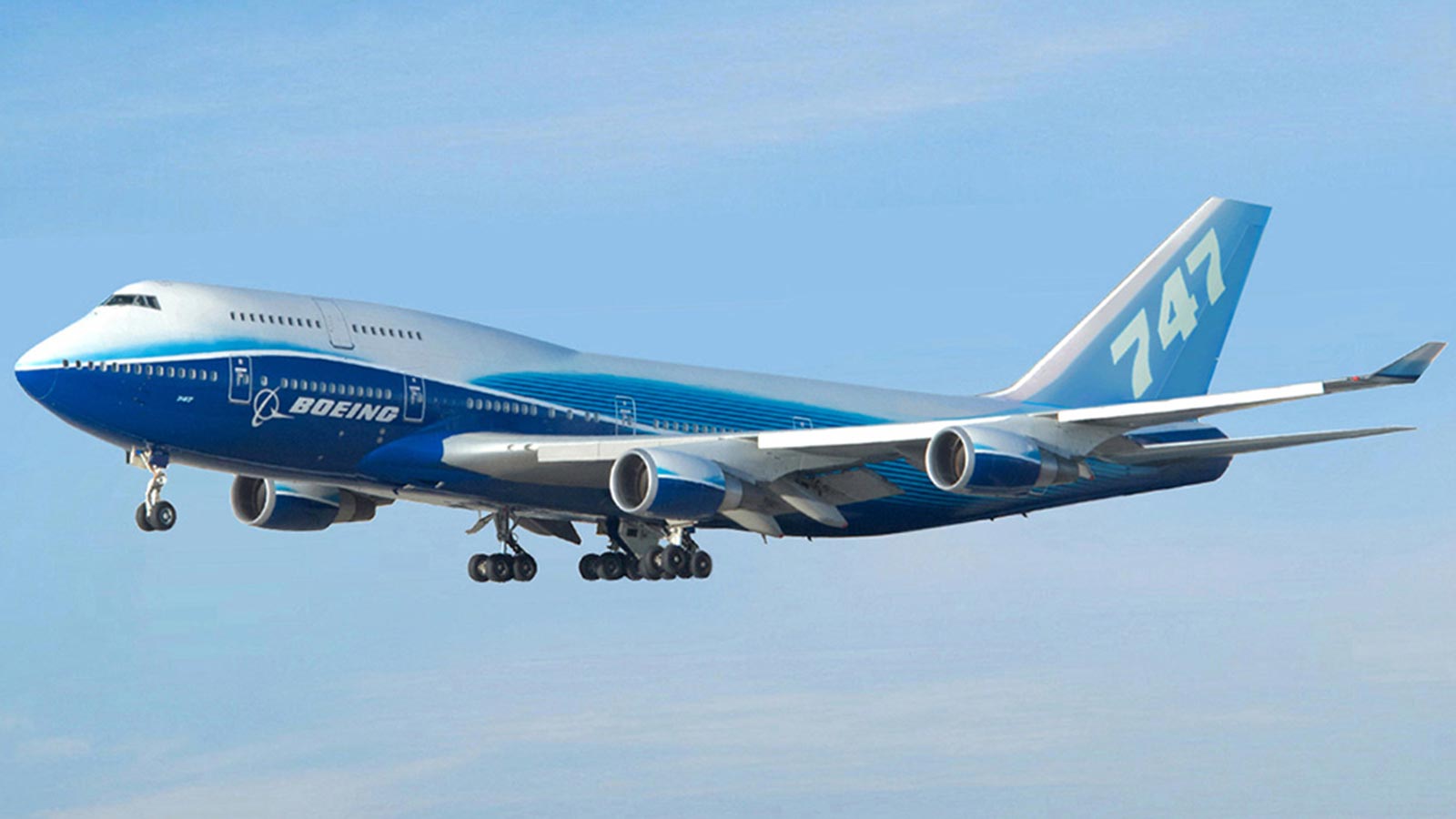
The Boeing 747, often called the “Queen of the Skies,” is one of the most iconic and influential aircraft in aviation history. It is a wide-body, long-range, four-engine jet that transformed long-haul air travel by making it more accessible and affordable for millions of passengers around the world.
The 747 program was launched in the mid-1960s, and the aircraft first flew in 1969 before entering commercial service in 1970 with Pan American World Airways. At the time, it was by far the largest passenger airplane ever built, more than twice the size of many earlier jets, and it introduced the concept of high-capacity wide-body airliners.
One of the most distinctive features of the 747 is its hump-backed upper deck, originally designed to house the cockpit so that the nose could be hinged open for cargo loading in freighter versions. This unique shape became the aircraft’s trademark and set it apart from every other airliner.
Over the years, several versions of the 747 were developed. Early models included the 747-100, -200, and -300, while the most successful passenger variant was the 747-400, introduced in the late 1980s with modern avionics, winglets, and improved engines. The latest and final version was the 747-8, featuring new engines, a stretched fuselage, and updated systems derived from the Boeing 787. There were also dedicated freighter models and many passenger aircraft later converted to cargo use.
In typical airline service, a 747 could carry around 400 to over 500 passengers in a three-class layout, while high-density configurations could seat even more. Its long range, often exceeding 13,000 kilometers depending on the variant, allowed airlines to connect distant cities nonstop, helping to globalize air travel and tourism.
The 747 was powered by four large turbofan engines, providing the thrust needed to lift its massive weight. While this gave it excellent performance and redundancy, it also meant higher fuel consumption and maintenance costs compared to later twin-engine wide-body aircraft, which eventually affected its economic competitiveness.
Passenger comfort was a major selling point in its era. The wide cabin allowed for multiple aisles, spacious seating layouts, lounges in early versions, and later premium cabins on the upper deck, which became a favorite spot for business and first-class travelers.
Beyond passenger service, the 747 became a true workhorse in cargo operations. Its large volume, long range, and nose-loading capability made it one of the most important freighter aircraft ever built, and it remains a backbone of global air cargo fleets even today.
The aircraft was also used for many special roles. Perhaps the most famous was Air Force One, the heavily modified 747s used as the U.S. presidential aircraft. The type has also served as a space shuttle carrier, firefighting aircraft, research platform, and military transport.
For decades, the 747 was the flagship of many major airlines, including British Airways, Lufthansa, Japan Airlines, Singapore Airlines, Qantas, and many others. It became a symbol of international travel and was often associated with luxury, size, and prestige.
As technology advanced, more efficient twin-engine aircraft like the Boeing 777, 787, and Airbus A350 gradually replaced the 747 in passenger service. Demand for very large four-engine jets declined, and Boeing eventually ended production of the 747 in 2023, delivering the final aircraft as a freighter.
Even though most airlines have retired the 747 from passenger service, many continue to fly in cargo roles, where their size and capabilities are still unmatched for certain missions.
The Boeing 747’s legacy is immense. It changed the economics of long-distance travel, opened the world to mass air transport, and remained in production for more than 50 years. As one of the most recognizable and beloved aircraft ever built, the 747 will always hold a special place in aviation history as a true giant of the skies.