
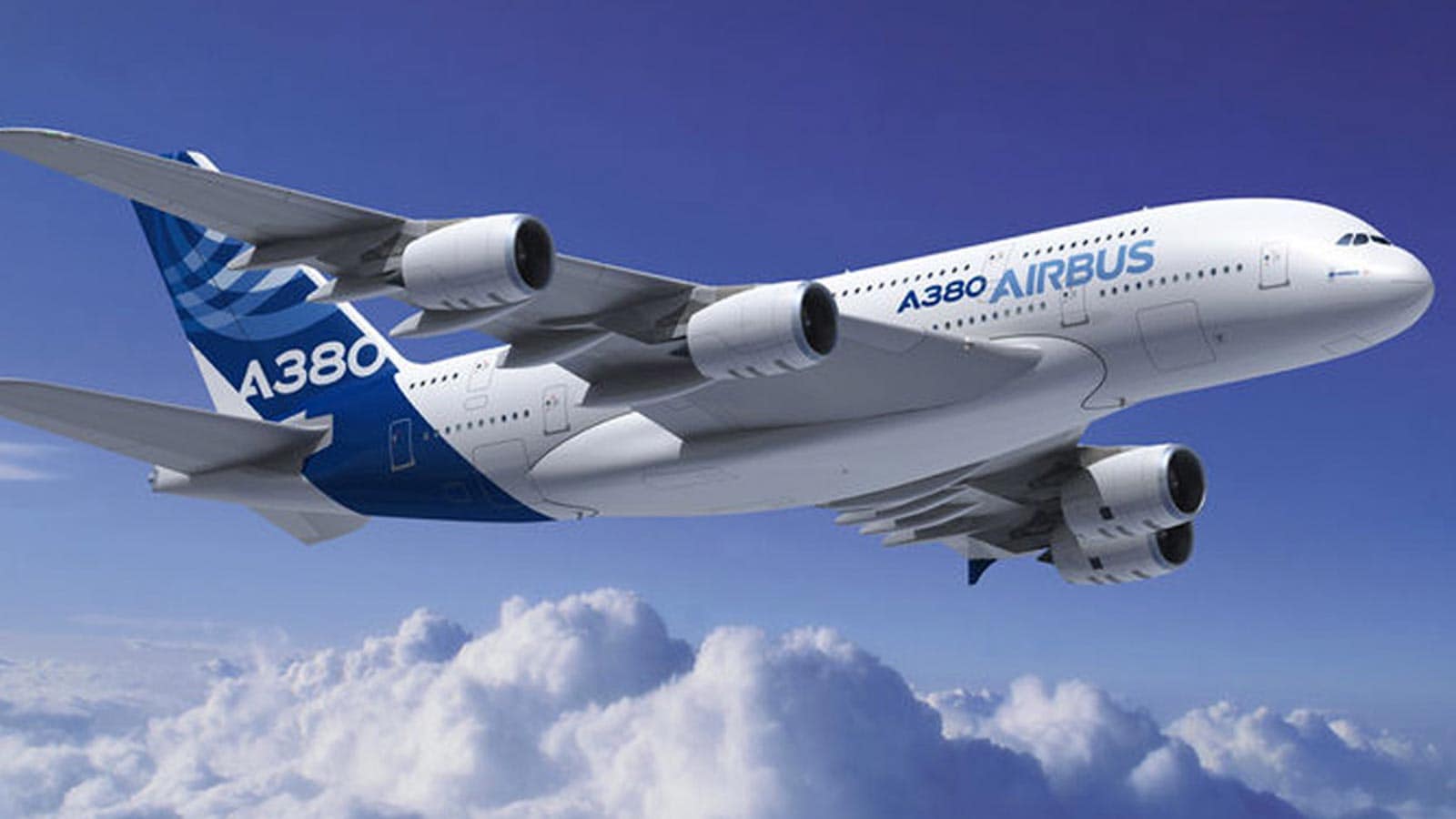
The Airbus A380 is the world’s largest passenger aircraft and one of the most iconic airplanes ever built, designed to transform long-haul air travel by carrying more passengers than any other airliner. It is a double-deck, wide-body, four-engine jet developed by Airbus to meet growing demand at busy international airports and to compete with Boeing’s 747.
The A380 program was officially launched in 2000, and the first flight took place in April 2005. After an extensive testing and certification process, the aircraft entered commercial service in 2007 with Singapore Airlines. The project involved one of the largest industrial efforts in aviation history, with major components built across Europe and assembled in Toulouse, France.
In terms of size and design, the A380 is enormous. It has two full-length passenger decks, a wingspan of about 80 meters, and a maximum takeoff weight of around 575 tonnes. It is powered by four turbofan engines, either the Rolls-Royce Trent 900 or the Engine Alliance GP7200. The aircraft is designed for long-haul routes and can fly nonstop for about 15,000 kilometers or more, depending on configuration.
The typical seating capacity of an A380 is around 500 to 550 passengers in a standard three-class layout, but it is certified to carry over 850 passengers in an all-economy configuration, making it the highest-capacity airliner ever to fly. Airlines often used the space to create premium features such as onboard lounges, bars, private suites, and even showers, especially in first class.
Passenger comfort was a major focus of the A380’s design. It has a wider cabin than any other airliner, larger windows, quieter engines, and smoother ride characteristics. Advanced air conditioning and pressurization systems help reduce fatigue on long flights, making it popular with travelers when flying.
Technologically, the A380 uses advanced materials such as composites and modern aluminum alloys to reduce weight while maintaining strength. It features fly-by-wire flight controls like other Airbus aircraft and shares cockpit commonality with models such as the A320 and A330, allowing pilots to transition more easily between types. Despite its size, the A380 is known among pilots for being surprisingly smooth and manageable to fly.
The A380 was designed mainly as a hub-to-hub aircraft, carrying large numbers of passengers between major international airports, where they would then connect to smaller flights. Airbus believed this model would dominate future air travel, especially as major airports became more crowded.
However, market conditions changed. Airlines increasingly preferred smaller, more flexible long-range twin-engine aircraft like the Boeing 787 and Airbus A350, which could fly point-to-point routes more efficiently. Although the A380 was technologically impressive, it was expensive to buy and operate, required special airport infrastructure, and was difficult for many airlines to fill consistently with enough passengers.
As a result, sales of the A380 were limited. Only about 250 aircraft were built, with Emirates being by far the largest customer, operating nearly half of all A380s produced. Other major operators included Singapore Airlines, Qantas, British Airways, Lufthansa, Air France, and Korean Air.
In 2019, Airbus announced it would end A380 production due to insufficient demand, and the final A380 was delivered in 2021. This marked the end of an era for very large passenger aircraft, as Boeing had also ended production of the 747 shortly afterward.
Even after production ended, many A380s continue to fly, especially with airlines like Emirates, which rely on the aircraft for high-capacity routes. Some airlines retired their fleets earlier, particularly during the COVID-19 pandemic, while others have brought the aircraft back into service as international travel recovered.
The A380 has also found new life in special roles. Some aircraft have been converted for charter use, government transport, or used as test platforms. There have been studies into cargo conversions, but full freighter versions were never widely developed.
From an environmental perspective, while the A380 is efficient per seat when fully loaded, its overall fuel burn is high compared to smaller modern jets, which contributed to its declining appeal. Still, it was quieter and cleaner than many older large aircraft it replaced.
The Airbus A380 remains a landmark achievement in aerospace engineering. It demonstrated what was possible in aircraft design and manufacturing on a massive scale and delivered an unmatched passenger experience. Although it did not achieve long-term commercial success, it earned a special place in aviation history as the largest and one of the most impressive passenger airplanes ever to take to the skies.