
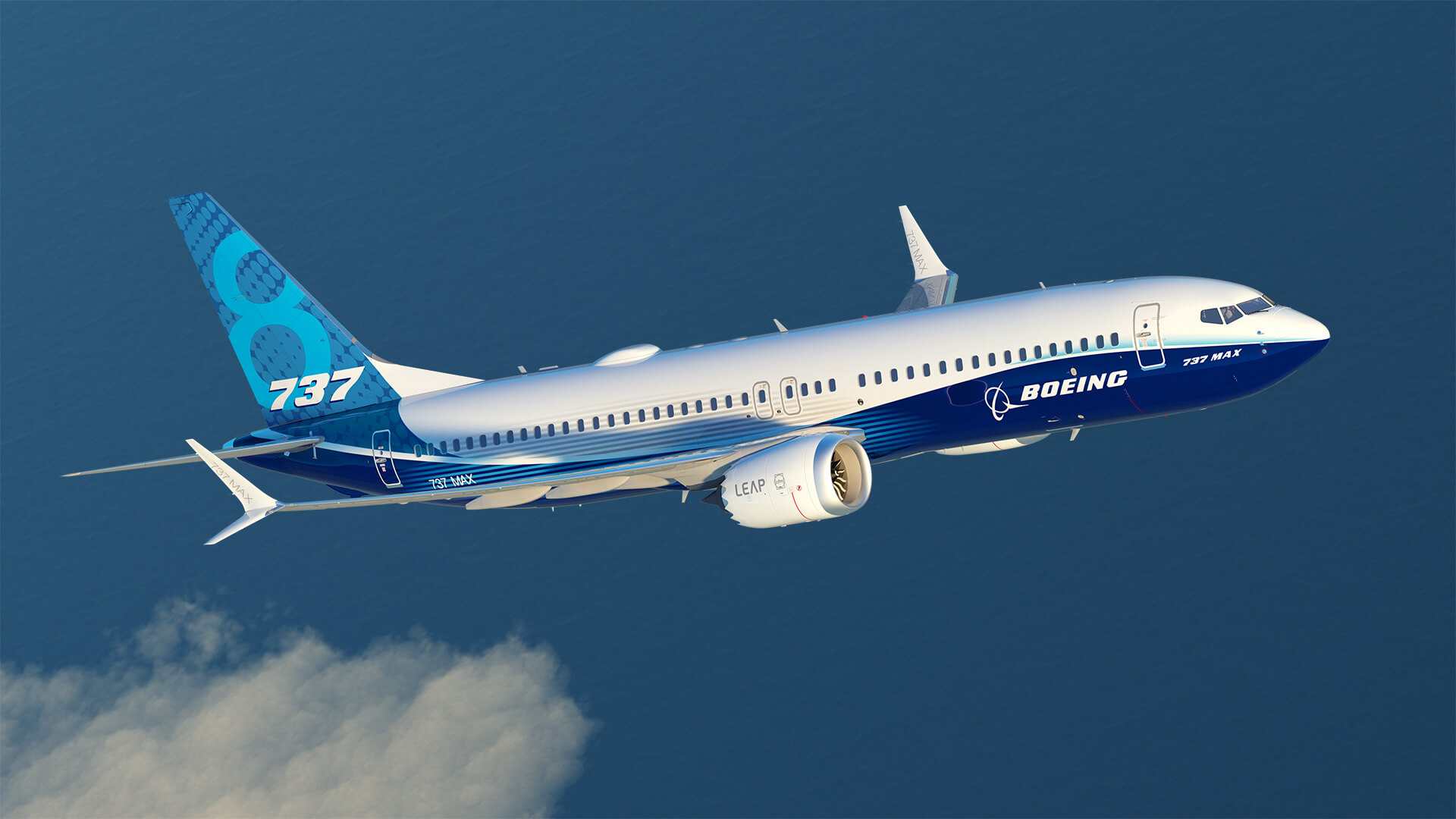
The Boeing 737 is the world’s most produced and widely used commercial jet airliner and is the backbone of short- and medium-haul air travel for airlines across the globe. It is a narrow-body, twin-engine aircraft designed for efficiency, high-frequency operations, and versatility, serving routes ranging from short domestic hops to longer international flights.
The 737 program was launched in the mid-1960s, and the first aircraft entered service in 1968 with Lufthansa. Boeing developed the 737 as a smaller companion to the 707 and 727, and over time it evolved into several generations, continuously updated to meet changing airline needs and technology standards. Its long production run of more than five decades makes it the longest-running commercial aircraft program in history.
The 737 family is generally divided into four generations. The Original series (-100 and -200) served early short-haul markets. The Classic series (-300, -400, and -500) introduced more efficient engines and greater capacity in the 1980s and 1990s. The Next Generation (NG) series (-600, -700, -800, and -900ER) became extremely popular from the late 1990s onward, forming the core of many airline fleets. The latest generation is the 737 MAX series (-7, -8, -9, and -10), featuring new engines and aerodynamic improvements for better efficiency.
Typical seating for the 737 ranges from about 120 passengers in smaller versions to over 200 passengers in high-density layouts for larger models like the 737-10. The aircraft is designed for quick turnarounds and high daily utilization, which is especially important for low-cost and short-haul operators.
A key feature of the latest 737 MAX family is the use of CFM International LEAP-1B engines, which offer significantly lower fuel consumption, reduced emissions, and quieter operation compared to older engines. The MAX also includes aerodynamic upgrades such as split winglets and modernized avionics, allowing airlines to reduce operating costs while maintaining compatibility with earlier 737 models.
The 737 has a conventional control yoke cockpit design and a philosophy of incremental development, allowing pilots trained on older 737s to transition to newer versions with relatively minimal retraining. This continuity has been a major factor in its popularity with airlines over the decades.
The aircraft has a strong reputation for reliability and simplicity, and it can operate from relatively short and less-developed runways, which makes it suitable for a wide variety of airports. Its range typically extends up to about 5,500 to 6,500 kilometers depending on the variant, enabling both domestic and regional international operations.
However, the 737’s history also includes major challenges. The 737 MAX program faced global grounding from 2019 to 2020 following two fatal accidents caused by issues related to the MCAS flight control system and pilot training. This led to intense regulatory scrutiny, design changes, improved training requirements, and a renewed focus on safety culture within Boeing. The MAX has since returned to service in most countries and continues to be delivered, though the episode remains a defining moment in the aircraft’s history.
The Boeing 737 is used by hundreds of airlines worldwide, including major carriers and low-cost operators such as Southwest Airlines, Ryanair, United Airlines, American Airlines, and many others. It forms the backbone of many fleets due to its efficiency, availability, and broad support network.
From an environmental perspective, newer versions like the 737 MAX offer improved fuel efficiency and lower emissions per seat compared to earlier models, and they are certified to operate with blends of sustainable aviation fuels. Still, competition from the Airbus A320neo family remains strong, driving ongoing improvements and market competition.
Over its lifetime, more than ten thousand Boeing 737s have been delivered, and many thousands more have been ordered, making it the best-selling jet airliner in history. It has transported billions of passengers and has become a familiar sight at airports around the world.
Overall, the Boeing 737 stands as one of the most important aircraft ever built. Its long evolution, global adoption, and central role in airline operations have made it a cornerstone of modern aviation, shaping short- and medium-haul air travel for more than half a century.